Cancer Fighting Diet: Part 2
If you followed us during Part I of our series on What is a Cancer Fighting Diet, you know that HOW much you eat matters (see Part I post). We can now discuss the impact of WHAT you eat.

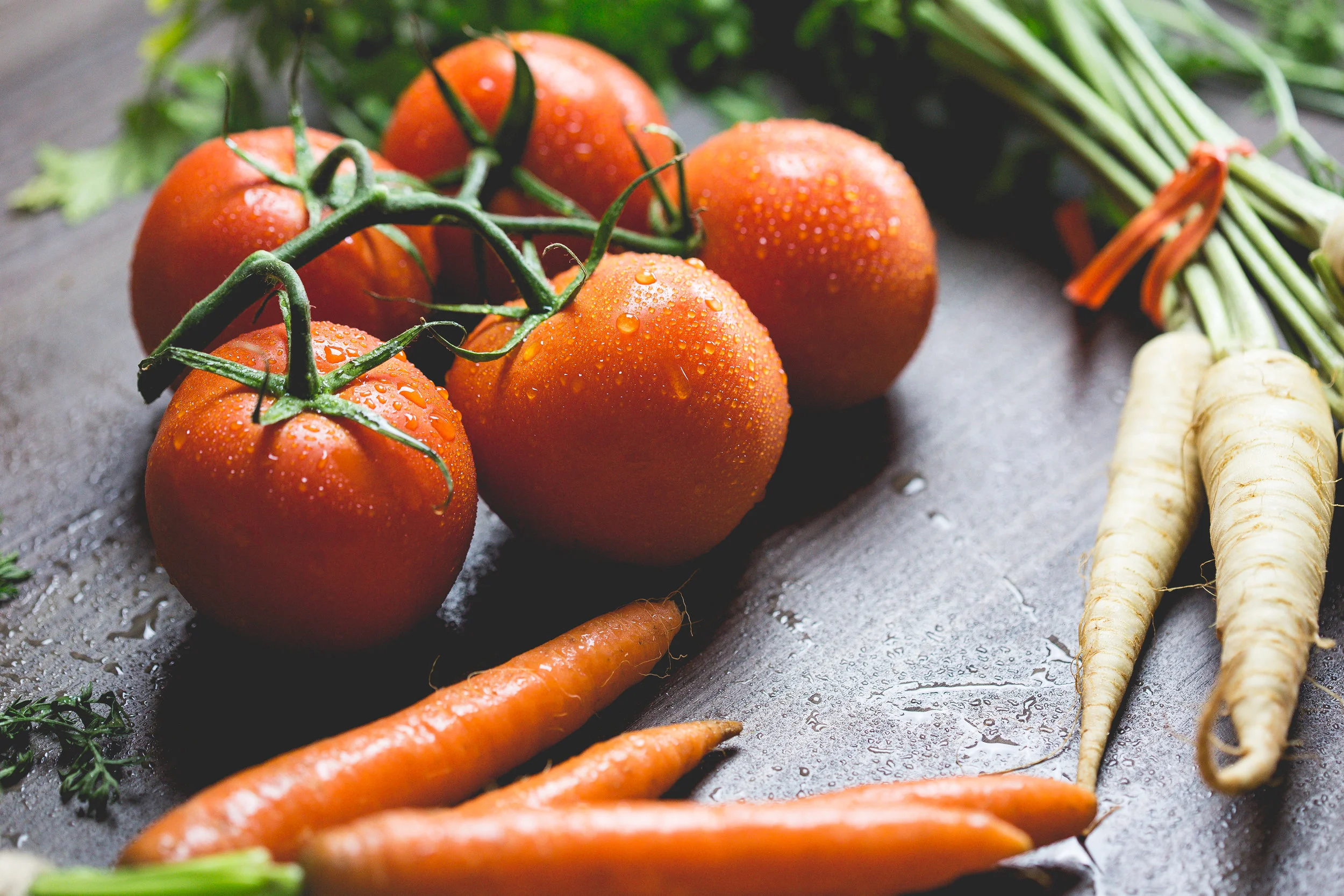
A cancer-fighting diet consists of mostly fruits and vegetables.
If you followed us during Part I of our series on What is a Cancer Fighting Diet, you know that HOW much you eat matters (see Part I post). We can now discuss the impact of WHAT you eat.
So what should you be eating on a Cancer Fighting Diet?
Simply put: a plate that consists of Mostly Fruits and Vegetables.
Plants contain vitamins, minerals, antioxidants, and therapeutic colors that can boost your immune system, prevent blood flow to a tumor, reduce inflammation[1], and tell cells that have made mistakes to kill themselves[2].
Each color of the RAINBOW represents a different phytochemical that is a CANCER FIGHTER. If your plate is 50%-75% full of colorful vegetables, then you’re giving your body the fuel it needs to help prevent and fight disease.
Specific fruits and vegetables have shown potential to help fight certain types of cancers. For example, cruciferous vegetableshave been associated with decreased cell proliferation in DCIS breast cancer[3] and inducing apoptosis in ovarian cancer[4]. In prostate cancer patients, lycopene from tomatoes has been shown to lower Prostate Specific Antigen (PSA)[5].
It’s important to include produce that has been shown in studies to have cancer fighting properties. It’s crucial that you meet with a nutritionist who specializes in oncology to guide you on the most comprehensive cancer-fighting diet that includes the most beneficial produce to arm you to fight for your individual wellness.
Please call us at (248) 798-2942, and allow one of our board certified nutritionists and natural medicine doctors work with you to use nutrition to fight cancer and live the life you desire.
-------------------------------
[1] Middleton Jr, Elliott. "Effect of plant flavonoids on immune and inflammatory cell function." Flavonoids in the Living System. Springer US, 1998. 175-182.
[1] Seeram, Navindra P., et al. "Blackberry, black raspberry, blueberry, cranberry, red raspberry, and strawberry extracts inhibit growth and stimulate apoptosis of human cancer cells in vitro." Journal of agricultural and food chemistry 54.25 (2006): 9329-9339.
[1] Zhang, Zhenzhen, et al. "Associations between cruciferous vegetable intake and selected biomarkers among women scheduled for breast biopsies." Public health nutrition 19.07 (2016): 1288-1295.
[1] Chen, Huaping, et al. "Epigallocatechin gallate and sulforaphane combination treatment induce apoptosis in paclitaxel-resistant ovarian cancer cells through hTERT and Bcl-2 down-regulation." Experimental cell research 319.5 (2013): 697-706.
[1] Zhang, Xin, Yong Yang, and Qi Wang. "Lycopene can reduce prostate-specific antigen velocity in a phase II clinical study in Chinese population." Chinese medical journal 127.11 (2013): 2143-2146.
Bethany: Why Did I Choose to Work in Cancer Care?
I had a patient ask me the other day, “Why did you choose this job?” First time a patient has ever asked me that. To be honest, I was a little surprised at the question...
I had a patient ask me the other day, “Why did you choose this job?” First time a patient has ever asked me that. To be honest, I was a little surprised at the question, but I think it’s a great question.
It’s good to get to know the person behind the white coat and see what motivates them. Takes away part of the stigma, and makes them seem more like a person. Quickly I responded that I’ve always had a passion for food and nutrition and I have a family history of cancer.
But is that really why I am doing this? I can honestly say yes, in part, but that’s not the whole truth.
Growing up, my mom was a dietitian. The food pyramid was the Holy Grail and we constantly were eating low-fat, reduced-calorie foods. My mom thought she was doing the right thing. Now, at almost 30, I realize that she was overweight and my whole family struggled with weight, including me.
After a 2 year battle with breast cancer that metastasized to her liver, my mom passed away. I was 9 years old. My go-to for comfort and control: food. My weight yo-yoed from being overweight to underweight, eventually being diagnosed with anorexia when I was 13. After meeting with doctors, a dietitian, and a therapist over time,
I was able to get my eating habits under control. My eating habits still aren’t perfect (I am human after all), but I’ve come a long way from that starving 13 year-old.
So back to the original question, why do I do what I do?
I do it in honor of my mom.
I do it so maybe I can save a 9-year old girl from going through what I went through.
I do it to help the moms, grandmas, dads, brothers, sisters, grandpas, aunts, uncles, cousins, and friends so they have a fighting chance against cancer, diabetes, obesity, and other diseases using food as their medicine.